
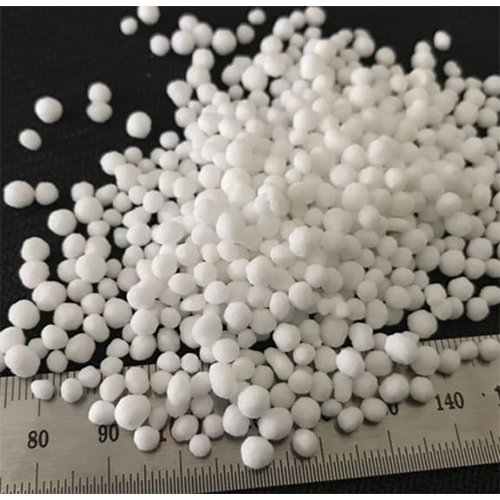
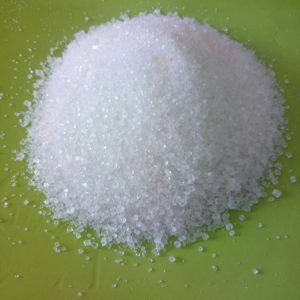
Urea 46 is the most common and widely used nitrogen fertilizer in the world. The “46” represents its Nitrogen (N) content of 46%, which is the highest concentration of nitrogen available in a solid fertilizer.
Because of its high efficiency and relatively low cost, it is the primary choice for boosting vegetative growth in almost all types of crops.
1. Technical Composition
-
Nitrogen (N): 46% (in the form of Amide).
-
Chemical Formula: $CO(NH_2)_2$.
-
Physical Form: It comes in two types—Prilled (small, soft granules) and Granular (larger, harder beads). Granular urea is often preferred for mechanical spreading as it is less likely to break or absorb moisture.
2. How It Works in the Soil
When you apply Urea to the soil, it undergoes a chemical reaction called Hydrolysis:
-
Urea is converted into Ammonium ($NH_4^+$) by the enzyme urease (found in soil).
-
The plants then absorb the nitrogen, or it further converts into Nitrate ($NO_3^-$).
-
This process usually takes 2 to 4 days, depending on soil temperature and moisture.
3. Key Benefits
-
High Efficiency: Since it is 46% Nitrogen, you need to transport and apply less total weight of fertilizer compared to other nitrogen sources like Calcium Ammonium Nitrate (CAN).
-
Versatility: It can be applied as a solid (soil application), dissolved in water (fertigation), or used as a foliar spray (spraying directly on leaves) in low concentrations.
-
Cost-Effective: It generally provides the lowest cost per unit of nitrogen for the farmer.
4. Critical Application Rules (To Avoid Loss)
Nitrogen in Urea is “volatile,” meaning it can turn into gas and disappear into the atmosphere if not handled correctly.
-
Incorporate Quickly: Always try to mix Urea into the soil or apply it just before rain/irrigation. If left on the surface of dry, warm soil, you can lose up to 50% of the nitrogen to the air (as ammonia gas).
-
Avoid Seed Contact: Do not place large amounts of Urea directly in contact with seeds, as the ammonia released during the reaction can damage the young seedlings.
-
Temperature Matters: Losses are higher in alkaline (high $pH$) soils and in very hot weather.
5. Common Uses
-
Top Dressing: It is most commonly used as a “top dressing” during the peak growth stages of crops like wheat, maize (corn), rice, and sugarcane.
-
Industrial Use: Beyond farming, Urea 46 is also used in the manufacturing of plastics, adhesives, and as an additive in diesel engines (AdBlue) to reduce pollution.
Reviews
There are no reviews yet.