
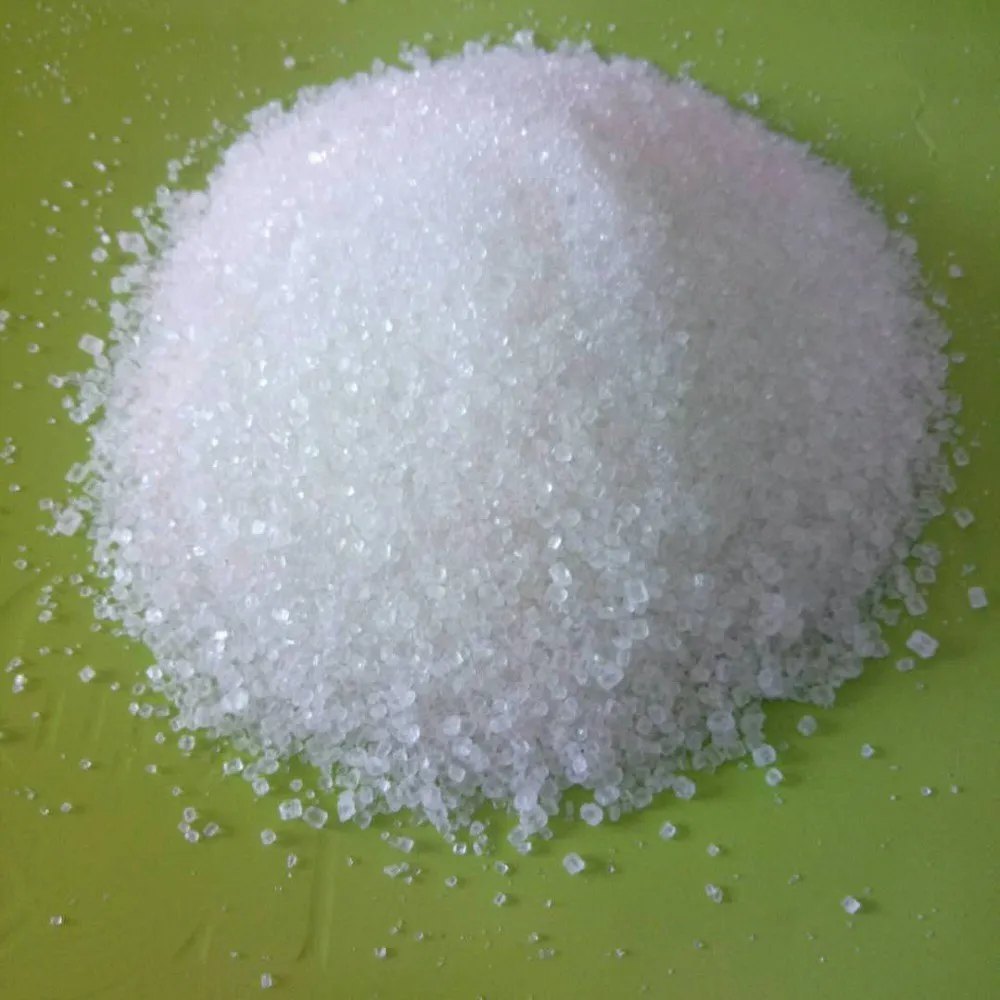
Ammonium Sulfate $(NH_4)_2SO_4$ is an inorganic salt that serves as an excellent source of both Nitrogen and Sulfur. While it has a lower nitrogen content than Urea, its added sulfur and soil-acidifying properties make it a specialized tool for many farmers and gardeners.
Here is the detailed breakdown:
1. Nutrient Composition
-
Nitrogen (N): Typically 21%. It is in the Ammonium form, which is stable in the soil and less likely to leach out compared to Nitrate.
-
Sulfur (S): Typically 24%. This is in the Sulfate form, which is immediately available for plants to absorb.
2. Key Characteristics
-
Acidifying Effect: Ammonium Sulfate is one of the most “acidifying” fertilizers available. When bacteria in the soil convert the ammonium to nitrate, it releases acidity. This is a massive advantage for alkaline (high $pH$) soils.
-
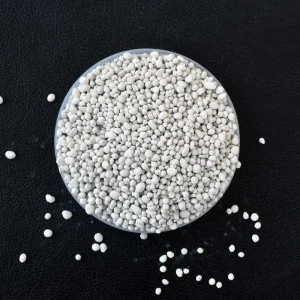
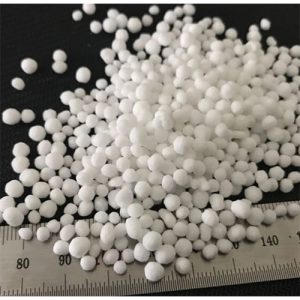
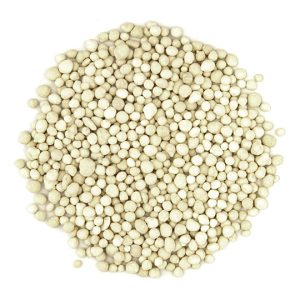
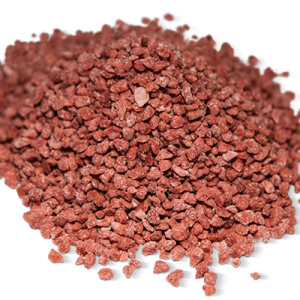
Physical Form: It usually appears as white to beige crystals or granules, resembling coarse salt.
-
Solubility: Highly soluble in water, making it suitable for both dry application and liquid fertigation.
3. Primary Benefits
-
The Sulfur Advantage: Sulfur is essential for the production of amino acids and proteins. It is particularly important for oilseed crops (like canola or mustard) and “allium” crops (like onions and garlic) to develop their characteristic flavors.
-
Stable Nitrogen: Because the nitrogen is in ammonium form, it binds to soil particles better than urea or nitrates, reducing the risk of nitrogen loss through gas (volatilization) or water runoff.
-
Iron Availability: By lowering the $pH$ in the immediate area of the fertilizer granule, it helps “unlock” micronutrients like Iron and Zinc that are often tied up in alkaline soils.
4. When to Use Ammonium Sulfate
-
On Alkaline Soils: If your soil $pH$ is above 7.0, this fertilizer helps bring it down to a more neutral range.
-
For Sulfur-Hungry Crops: Best for crops like cabbage, broccoli, canola, and legumes.
-
Cold Weather: Ammonium is absorbed more efficiently by plants in cool, wet spring soils than some other forms of nitrogen.
5. Comparison: Ammonium Sulfate vs. Urea
| Feature | Ammonium Sulfate | Urea |
| Nitrogen Content | 21% | 46% |
| Sulfur Content | 24% | 0% |
| Soil $pH$ Effect | Strongly Acidifying | Slightly Acidifying |
| Nitrogen Loss | Low (Stable) | High (Volatile if not buried) |
Reviews
There are no reviews yet.