
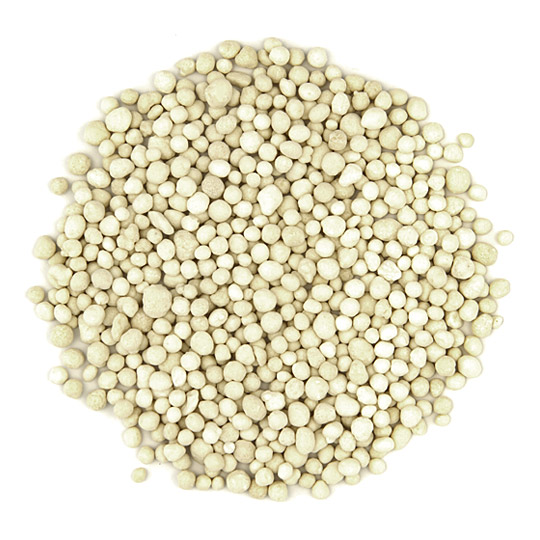
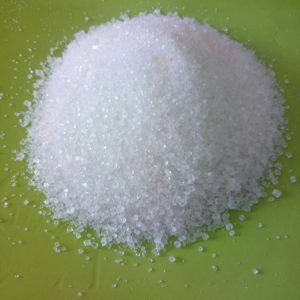
Monoammonium Phosphate (MAP) is one of the most widely used dry phosphorus fertilizers in the world. Its chemical formula is $(NH_4)H_2PO_4$, and it is highly valued for its efficiency in providing plants with essential nutrients right at the start of their growth cycle.
Here is a comprehensive description of MAP:
1. Nutrient Composition
MAP is a highly concentrated fertilizer containing two primary macronutrients:
-
Phosphorus ($P_2O_5$): Typically 52%. This is vital for root development, energy transfer within the plant, and seed/fruit production.
-
Nitrogen (N): Typically 11%. This provides the initial boost for vegetative growth and helps the plant absorb phosphorus more effectively.
2. Key Characteristics
-
High Water Solubility: It dissolves quickly in moist soil, making the nutrients immediately available to the plants.
-
Acidic Reaction: MAP has a lower $pH$ (around 4.0 to 4.5) compared to other fertilizers like DAP. This makes it ideal for alkaline (high $pH$) and calcareous soils, as the acidity helps prevent “phosphorus fixation” (where phosphorus gets stuck in the soil and plants can’t use it).
-
Physical Form: Usually sold in granular form, making it easy to spread evenly using mechanical spreaders.
3. Primary Benefits
-
Root Stimulation: Because of the high phosphorus content, it is the “go-to” fertilizer for establishing strong, deep root systems in young crops.
-
Seed Safety: It has a low “salt index” and lower ammonia release compared to DAP, which means it is less likely to cause “seed burn” when placed close to the seeds during planting.
-
Versatility: It can be used as a base fertilizer, a top dressing, or even dissolved for use in fertigation (irrigation systems).
4. Comparison: MAP vs. DAP
While DAP (Diammonium Phosphate) is also popular, MAP is often preferred in specific scenarios:
-
Soil Type: In soils with high lime content or high $pH$, MAP is more effective because its acidic nature keeps the phosphorus available to the plant longer.
-
Nitrogen Balance: If you want to deliver a heavy dose of Phosphorus without over-applying Nitrogen early in the season, MAP is the better choice.
5. Common Uses
MAP is used globally for a variety of crops, including:
-
Broad-acre crops: Wheat, corn, and soybeans.
-
Horticulture: Fruit trees and vegetables that require a strong start.
-
Blends: It is often used as a base ingredient in “bulk blends” to create specific N-P-K ratios for different soil needs.
Reviews
There are no reviews yet.